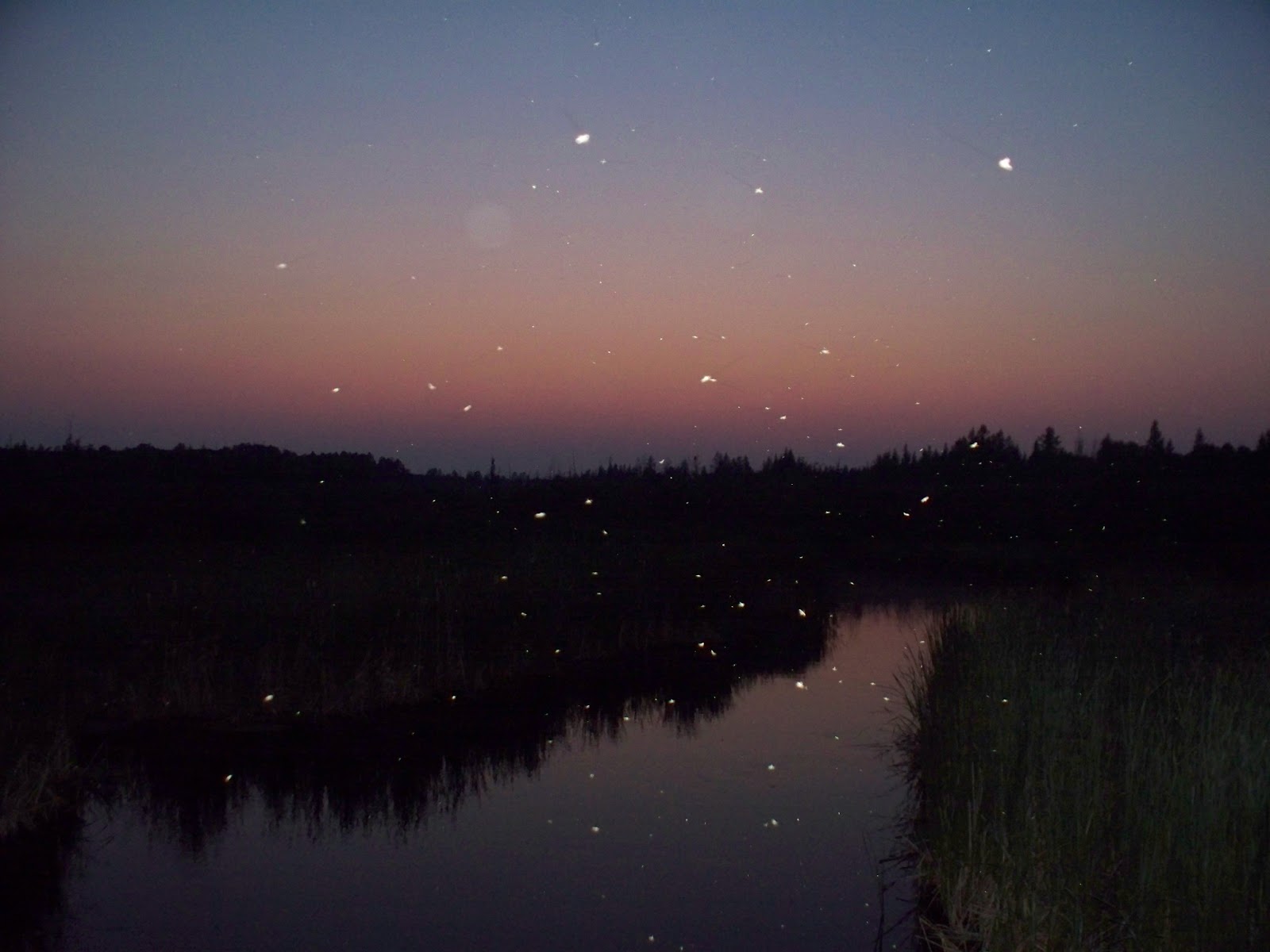
Round about the summer solstaice through July fourth, give or take a week, there is a hatch of
hexagenia, limbata that emerges from a stream not far from my digs. Over the years, the brown trout that lurk in the river where the hatch occurs have been hotly pursued by the Piscator, ever hopeful that he might be able to bring a big one to hand. Relative to other trout waters, its a pretty low numbers deal, but there are some big fish to be had, and a weak semblance of predictability that keeps me interested year after year. Well OK, it's pretty much a crap shoot when you lay the whole thing out.
Generally when fishing the hex hatch I hit the water at the crack of 9:00 pm. Time enough to suit up, lather up with bug dope, hike into a good (relative term) spot and wait for the show to begin. If the curtain actually goes up, it's happening by about 10:15 and all over in 45 minutes at legal closing time. It's always a big game of chance that goes something like this:
As the daylight finally fails a sparse hatch of insects might begin, consisting of a few Giant stones, sulphers, maybe some bigger stuff like Hendricksons or march browns, couple of caddis - and maybe three Hex total - and not a riser anywhere. The following night there might be Hex duns hatching off the water like popcorn in the middle of a blizzard - and not a single fish showing! Then the following night the Spinners are swarming and falling from the sky like November mallards to a picked cornfield - and no fish showing !!
But then again it might go like this:
Not a bug anywhere to be seen and the fish just whack with abandon, even a poorly placed and sunken fly!
Or perhaps a moderate train of hex on the water rolls past and a perfect rhythm of rise, cast, take, fight, land, release, and you think it's just so easy. Shit pours into your head like "we bad, we bad!", "I am freakin' invincible", "pro staff", custom endorsements, and other euphoric nonsense! But, oh here have been some memorable hatches that produced so many hex that you could feel them hitting your rod in the darkness and they covered face and hands - complete with obliging hungry fish!
And then there are those rare and crazy times when you could probably just hook on a wine cork or one of your own stinky socks, throw it out there - and the stupid bastards would jostle each other out of the way for a chance to kill and eat it !
But of course that is all tempered by the dreaded and always possible no flies and no fish scenario.
Now mix and match these differing situations into whatever probability/predictability model/equation you might want to construct, and there you have the Hex game. There's also the whole range of climatic and hydrologic variables, but I won't get into that.
The one constant though is the Vampire swarm. Shortly before the Hex are, or are not going to come out, the legions, and I mean legions, no perhaps I mean Mongol Hoards; ok, I'll just go with Gazillions of fuggin mosquitoes arrive to dine on whatever nano patch of exposed skin that you have missed in the liberal application of some awful formulation of DEET.
So I've been out there lately and the score is 0 for 3. Skunked, blanked and busted. The first night out and it was the no bug no fish routine. The second outing produced a couple of bugs and a couple of small fish that rose but weren't hooked. And the third night went kind of like this:
Arrive at river at the appointed hour. Suit up, dose self liberally with horrible mosquito repellant. Hike to spot and set up. Feed mosquitoes while staring at flat, hexless, fishless water. Observe large beaver swimming upstream into preferred fishing spot. Curse the fuggin luck. Endure 20 minutes of beaver harassment which includes grunting, hooting, tail slapping, menacing submarine swim by, and general fugging up the hole behavior. Harasss beaver with splashing, kicking, yelling, cursing and finally log throwing behavior. Unjoint rod as beaver meanders downstream laughing. Notice inexplicable fish rise withing casting range. Notice inexplicable fish # 2 within casting range. Rejoint rod. False cast to fish #1 and plant fly firmly in alder bush. Curse. Yank, pull, wobble on line and put fish down while breaking off fly. Tie on new fly in the dark with headlamp and old eyes and happy mosquitoes between eyeglasses and eyeballs. Turnoff headlamp and let eyes adjust to darkness. Observe fish # 2 still present. False cast toward fish # 2 and bang fly on rod tip on forward cast. Curse.
Throw unchecked fly to fish # 2. Set hook and miss as fish # 2 pounces on fly. Check hopelessly fouled fly in headlamp glow. Call out loud to self "putz, dilrod, moron", and endless other derogatory terms. Leave.
Guess the book is closed on hex hatch 2013.